Get partners live
without the back-and-forth.
Draw the onboarding journey once. The desk runs it, checks their work, and answers their questions.
For payment, ID and banking platforms · Runs on your own servers · Amharic, Afaan Oromo, English
Why we built this
Earlier this year we connected a client's shop to a mobile money platform. The code took a week. Getting approved took most of a month.
Questions went into a chat group with dozens of other companies and scrolled away. Nobody could tell us what the go-live review would check, so we found out by failing it. After launch, customer receipts showed a number instead of the shop's name, and we reported it three times before anyone picked it up.
None of that was anyone's fault. The platform team was small and buried. They didn't need more people. They needed better tools for the work they were already doing.
The Recite Labs team, Addis Ababa
The checks run before your engineers look.
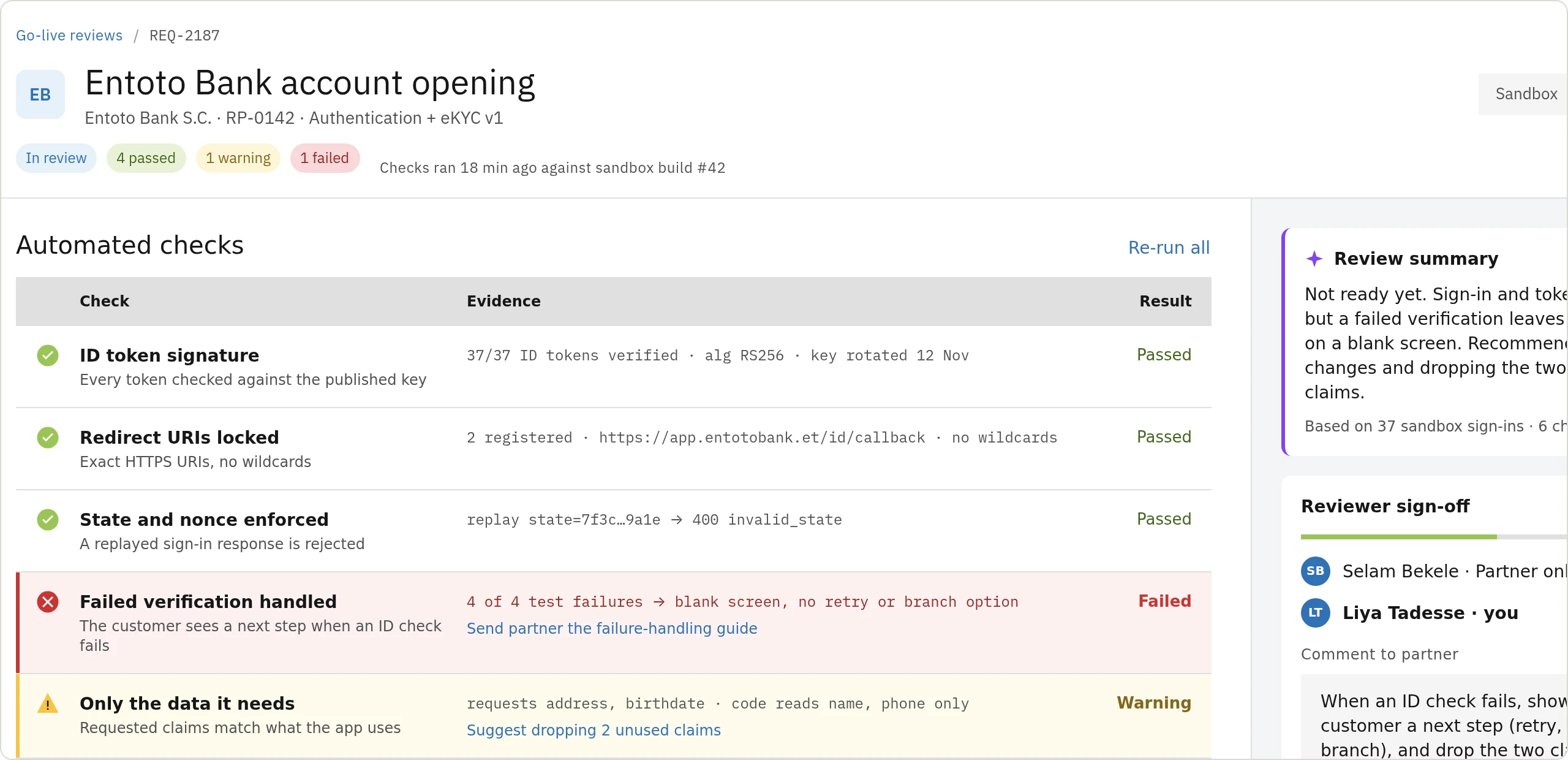
Each go-live step in a journey runs your platform's checks against the partner's real sandbox traffic. Your team opens a review that already says what passed, what didn't, and why.
Partners always know where they stand.
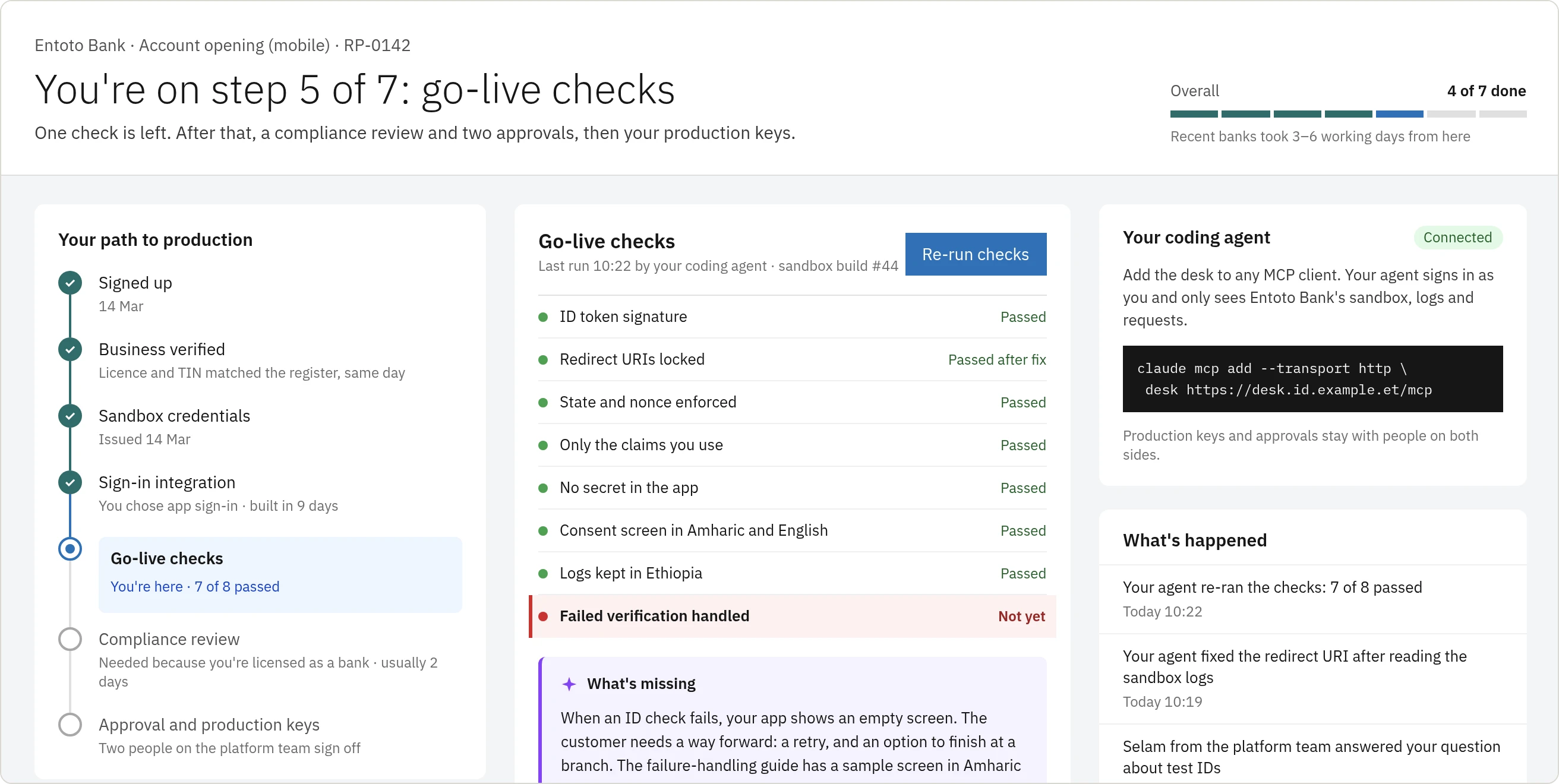
Each partner sees their own path through your journey: what's done, what's next, and why a step applies to them. When a check fails, it says what's missing in plain words, and gives them a prompt to hand to their coding agent.
Every question gets an owner.
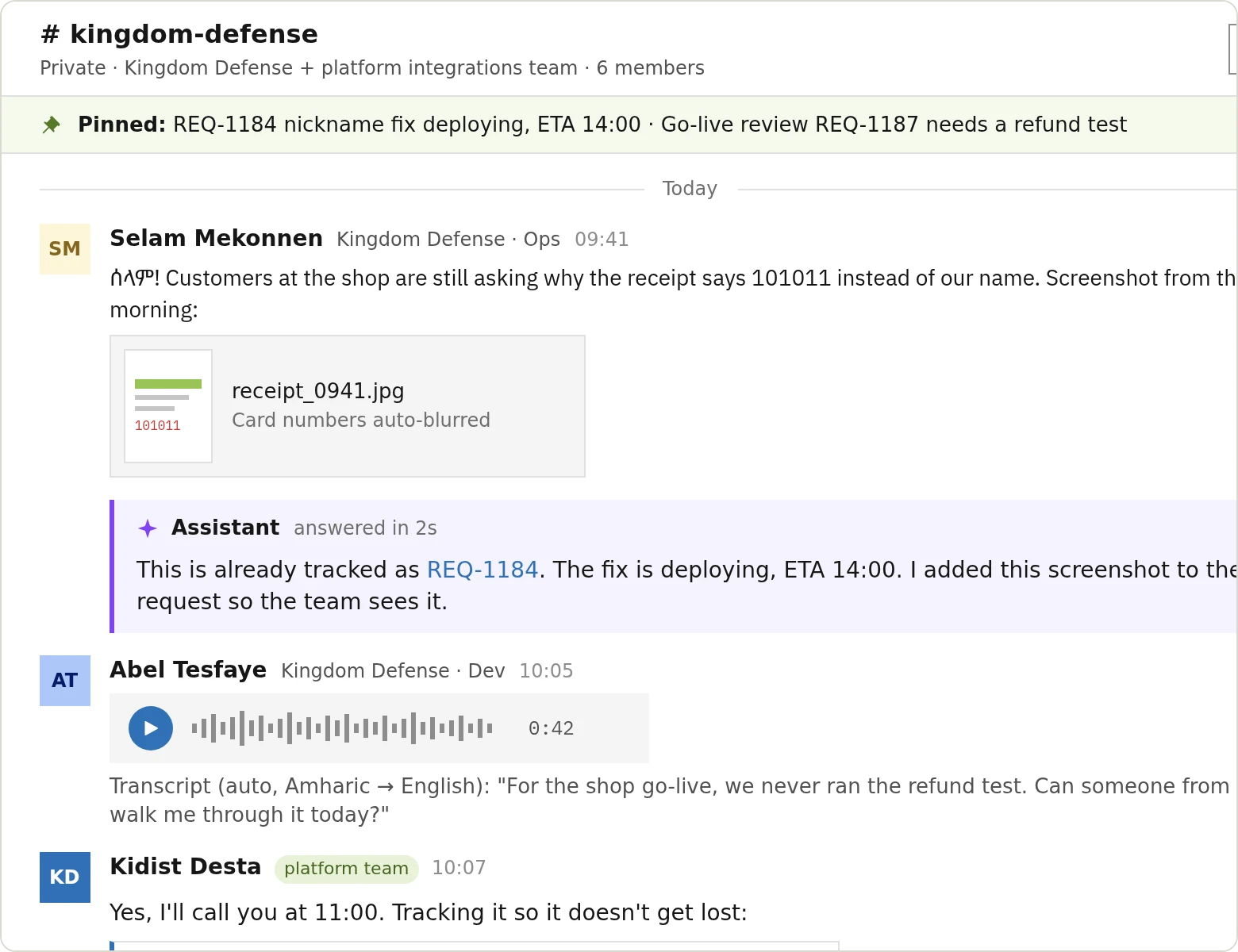
Each partner gets a private channel with your team. They can type or send a voice note in Amharic. If the answer is already known, the desk replies in seconds. If it isn't, it becomes a tracked request with a deadline and a name on it.
Know who you're dealing with.
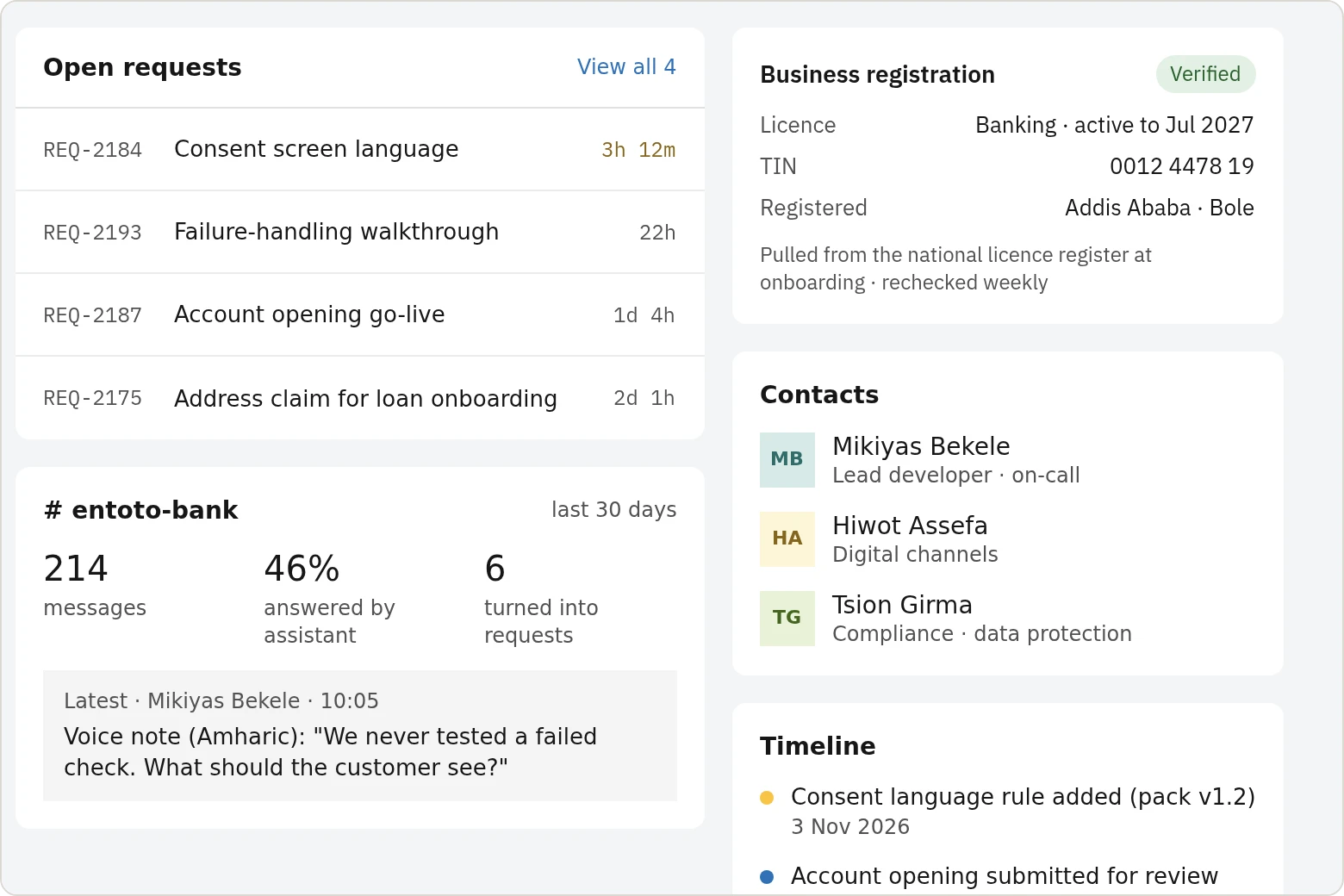
When a company signs up, its trade licence and TIN are looked up in the national business register before anyone on your team spends time on it. One page then shows everything about that partner: their apps, open requests, contacts and how their integration is behaving.
Their coding agent can do the integration with you.
The desk is an MCP server. A partner's developer points their coding agent at it, and the agent can read your docs, look at its own sandbox logs, run your go-live checks and open a request when it's stuck.
Your team uses the same server from their own assistants. Agents get the permissions of the person they act for, and the steps that matter, like production keys, always need a human.
> get us through the sandbox checks for the account-opening app
● desk.get_sandbox_logs  3 callbacks failed: redirect URI doesn't match
  Fixed the callback path in config/auth.ts
● desk.run_go_live_checks  7 of 8 passed
  Still failing: "failed verification handled". The platform
  wants a retry or branch option when an ID check fails.
● desk.search_docs  found the failure-handling guide
  Added a retry screen and a "visit a branch" fallback.
● desk.run_go_live_checks  8 of 8 passed
  Ready for review. Production keys need approval from
  the platform team. I've let them know.
And the parts nobody puts in a demo
- It runs on your servers. Partner data, logs and documents stay inside your infrastructure, in Ethiopia.
- A person signs off. The assistant drafts replies and summarises reviews. Approving a launch or changing the docs is always someone on your team.
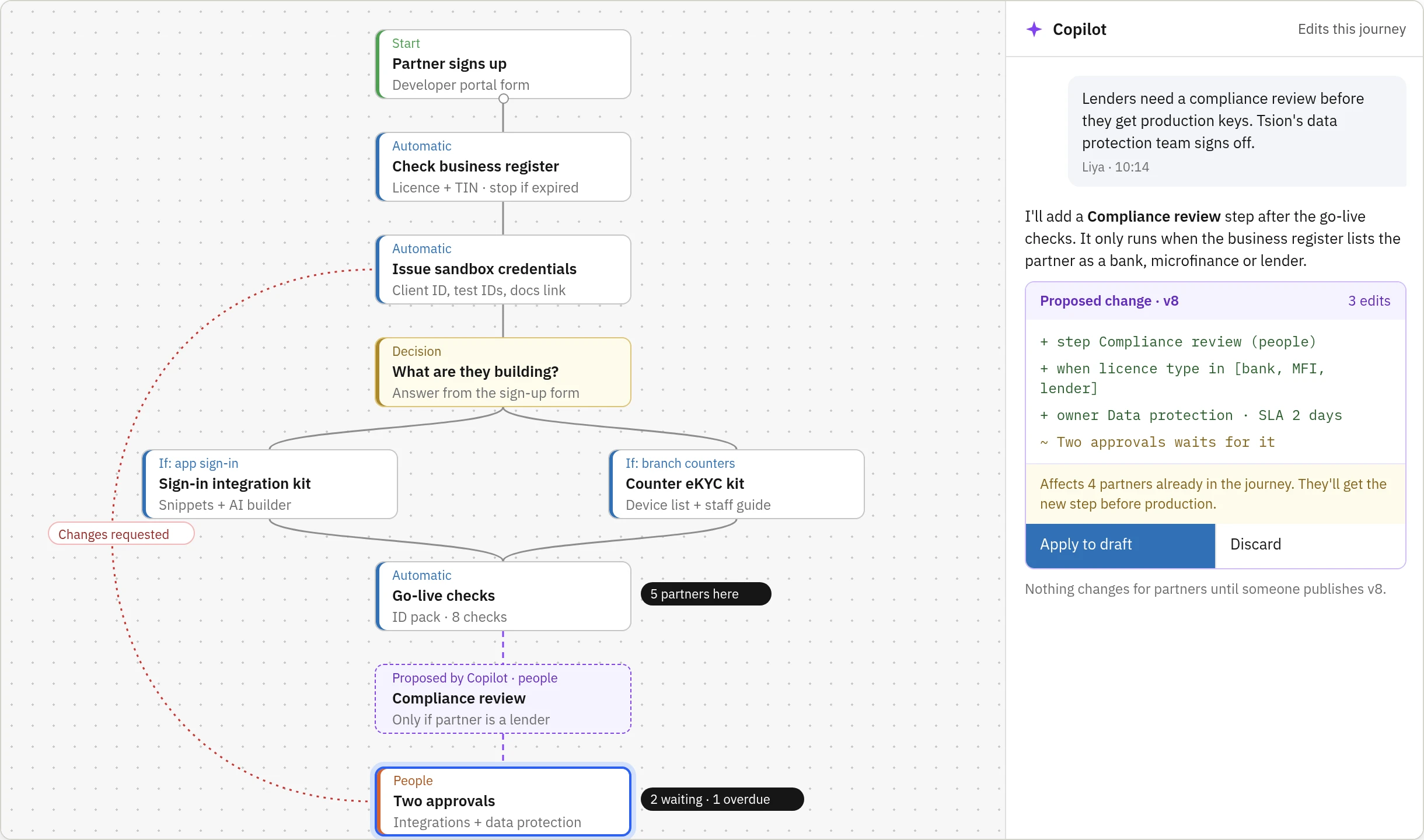
- Changing the process doesn't need a developer. Move steps around on the canvas or describe the change to the copilot. Every version is kept, and you can see exactly which partners a change will reach before you publish it.
- Announcements reach the right people. When an API changes, the desk works out which partners are affected and tells only them, then follows up with those who haven't acted.
Try it with your next five partners.
A pilot runs for twelve weeks next to how you work today. At the end you'll know how long onboarding took each way, and how much of your engineers' time it used.